rural report
We’re just past the halfway point in winter, and I realize that I haven’t shared
much news about the farm this season. This is the part of the year when Jude
and I stroll through seed catalogues and plan our spring offensive, so not much
is actually happening.
That’s why I’ve been able to report on other events around the island, tell you
about our snowshoeing adventure, recast The Wizard of Oz, and give you the
back story on L. Frank Baum.
So you’ve probably been wondering “but what about the chickens?” I’m jolly
to report that the four are doing well and are still laying. There has been some
shaking up of the pecking order, judging by the order they’re in on the roost
when I tell them goodnight and thanks for the eggs.
It used to be, from left to right: Juveli, Sally, Brenda and Hudi. Now, more often
than not, it’s Juveli, Sally, Hudi and Brenda. I believe this is quite the social ad-
vancement for Hudi, since Brenda rules the roost and Sally is her wing man, so
to speak. Plus, Sally has eyes on the throne.
We plan to add four to twelve hens in the spring, possibly building another coop
at the opposite corner of the garden. Until then, they have plenty of elbow room,
assuming they have elbows. Here they are trying to figure out the ice cube in
their water bowl during a recent cold snap:

We had six really cold nights in mid January, the coldest hit -12 C. (10 F.). Our
main waterline froze, and you really can’t blame it. It’s 90 percent above ground.
We have a backup system that involves running a garden hose from a faucet on
one of the microhydro pipes to the house.
During the snap, I drew a hot bath and settled into it to listen to a CD recorded
by my shaman friend Ducks. I was asea with her haunting songs when I turned
the tap on for more hot water. Nothing. I had forgotten to leave a drip on. The
hose froze in 30 minutes or less.
I duly reported this to Ducks. She reminded me that the trickster’s main mes-
sage is “wake up!” He really got me on that one.
We’ve had a lot of rain: 386 mm (15 inches) last month. In January ’11, we had
300 mm (12 inches); in ’10, 464 mm (18 inches). January is a good month to
have in your rear view mirror.
We get clobbered with precipitation to start every year. It’s just a question of
the proportion of rain to snow. This is our seventh winter here. I’ve learned
to make no predictions as to how the rest of this stand-offish season will play
out. But, as always, I hope for more rain than snow.
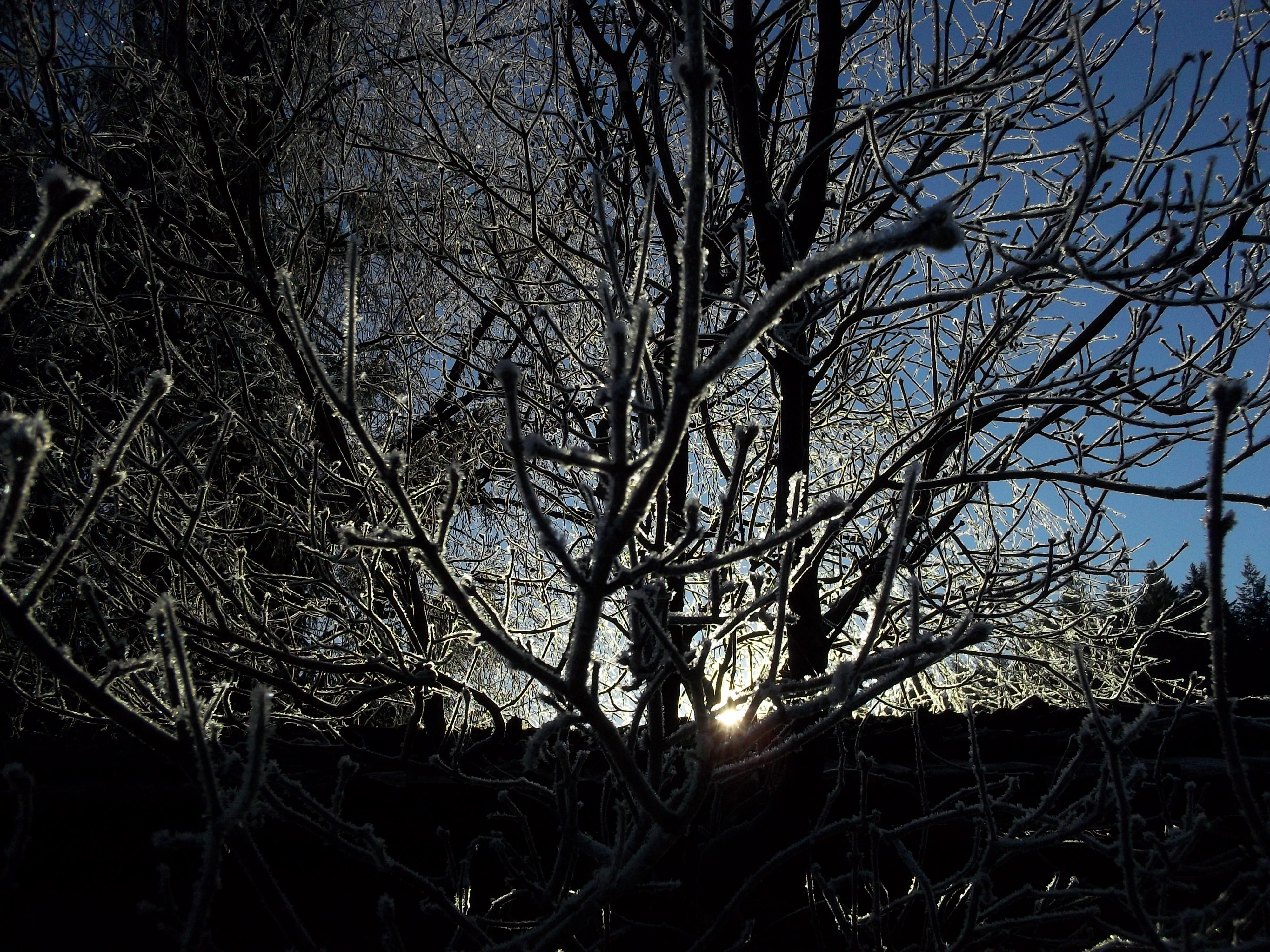
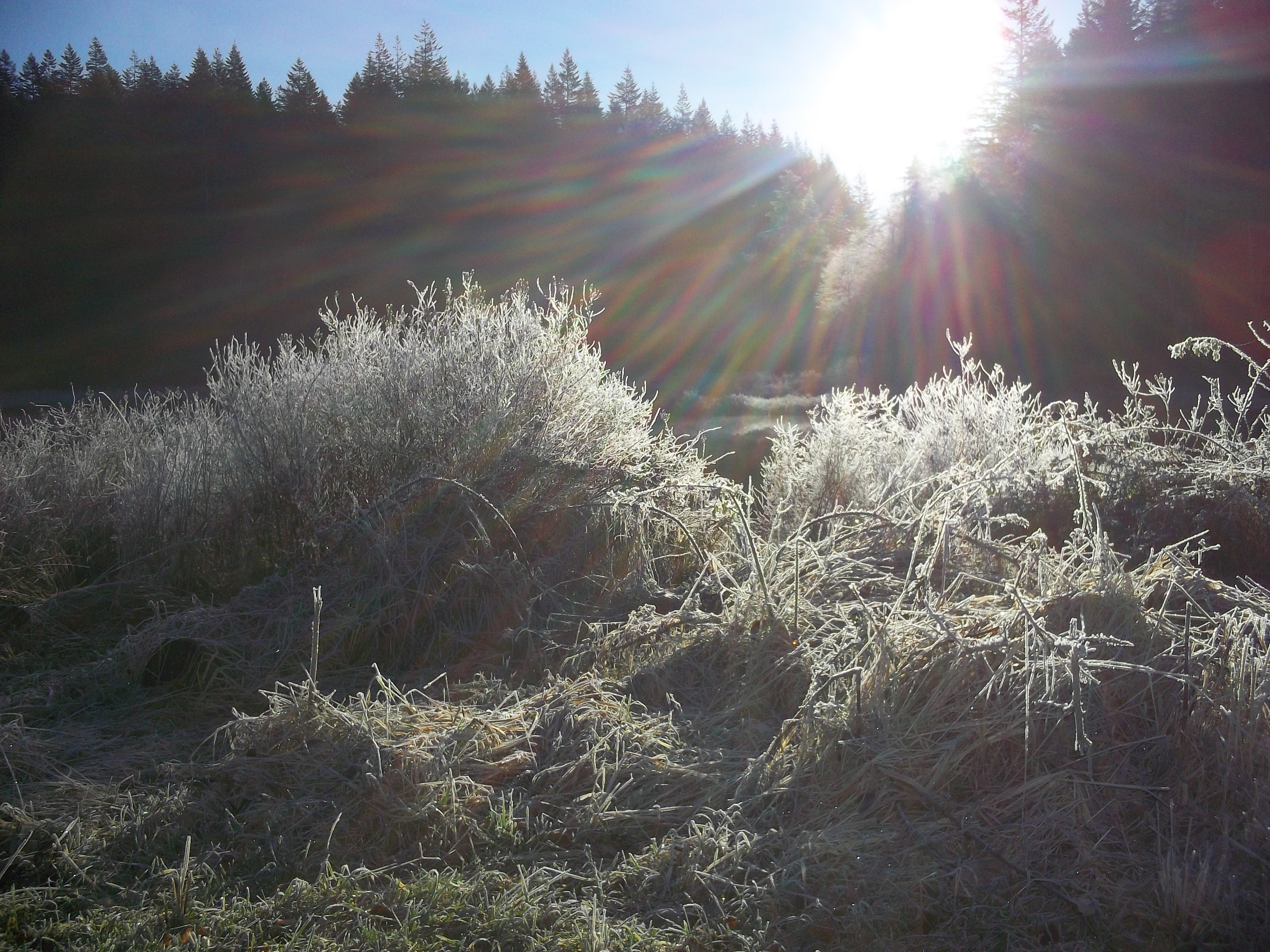
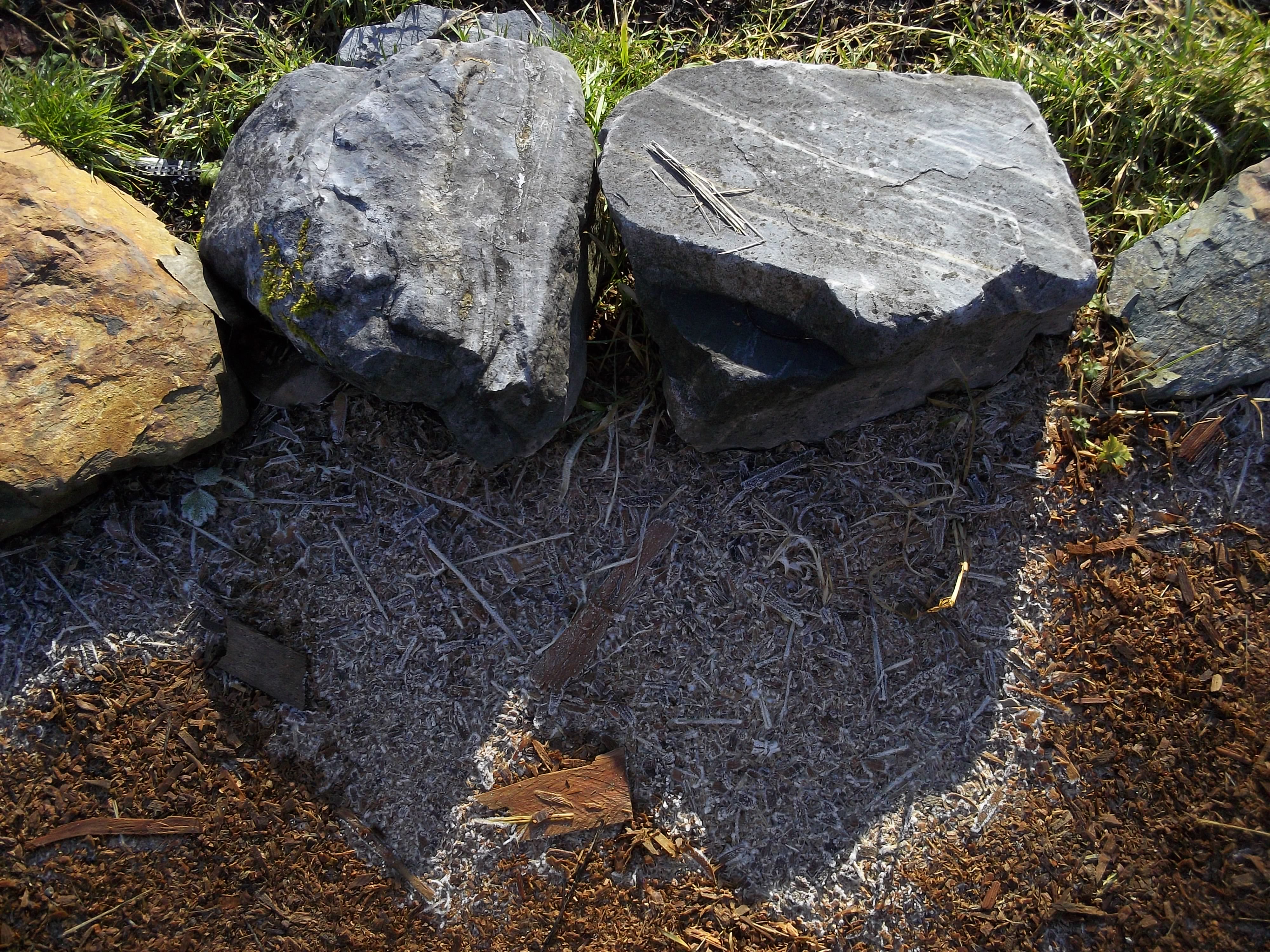
Last week, on the heels of the cold snap, we had a sunny morning with lots of
frost. Please enjoy it.